Piano Playing Facts

Can You Learn Piano While Working Full-Time in London?

2026-04-06T08:24:34+01:00

Demanding corporate schedules, back-to-back meetings, and never-ending work to-do lists – can piano fit into this busy lifestyle? As adults, the reality is: working full-time jobs limits our time for hobbies and recreational activities. After a full day of work, most people want to relax rather than think about practising the piano. London’s working culture usually involves 9–5 schedules, or sometimes longer, for most people. It is fast-paced, polite, and increasingly hybrid, blending professionalism with a strong focus on work-life balance and social interaction. People know how to work hard, but also know when to take a break and make the [...]

Can You Learn Piano While Working Full-Time in London?2026-04-06T08:24:34+01:00

Piano Music Picks Across Genres

2026-02-25T15:12:09+00:00

Listening is one of the most overlooked aspects of piano development. Students often focus understandably on technique, sight-reading and repertoire preparation, yet forget that the ear is the true guide of musical refinement. What you listen to shapes how you phrase, how you balance tone, and how you understand style. At the London Piano Institute, we encourage our students not only to practise thoughtfully, but to listen actively. Below is a curated selection of piano music across genres — classical, jazz, contemporary and film — with notes on what each can teach you as a developing pianist. https://www.youtube.com/watch?v=EvNsPyp5O2I Classical Depth: Frédéric [...]

Piano Music Picks Across Genres2026-02-25T15:12:09+00:00

One Piano Many Roles in Ensemble Performance

2026-02-13T13:49:20+00:00

You may be familiar with the many styles of piano music, but the ways in which pianists perform extend far beyond style alone. The piano is one of the most versatile instruments, functioning equally convincingly as a solo voice, a collaborative partner in small ensembles, and a powerful presence within large ensembles and orchestras. Each performance context places different technical, musical, and collaborative demands on the pianist. Understanding ensemble size is therefore essential, not only for repertoire selection, but for developing the skills required to communicate, listen, and lead effectively in each setting. This article explores the main types of musical [...]

One Piano Many Roles in Ensemble Performance2026-02-13T13:49:20+00:00

Why Pianists Must Be Trained to Think Not Just Play

2026-02-12T14:14:51+00:00

Sometimes we forget that there is more to piano than simply playing the notes. A common misconception among pianists is that piano training equals technical mastery. Of course, piano training is a fundamental building block, however, the value of technique has its limits. In the modern technological landscape, machines and artificial intelligence are increasingly capable of reproducing piano performances with remarkable technical accuracy. While many scholars and musicians acknowledge that technological advancement will continue to influence and reshape the music industry, there is broad agreement that it cannot replace the musician. Unlike human performers, artificial intelligence lacks the capacity for musical [...]

Why Pianists Must Be Trained to Think Not Just Play2026-02-12T14:14:51+00:00

Learn These Easy Piano Songs to Impress Anyone

2026-01-19T09:06:06+00:00

Many beginners assume you need to play advanced, finger-twisting pieces to impress people, which is almost never the case. Most of the time, audiences don’t care whether you’re tackling a Grade 8 showpiece or a three-chord progression. They care about how it sounds, whether it feels familiar, and whether you play it with confidence. And luckily for all of us, plenty of songs check all those boxes without requiring months or years of training. The difficulty of playing piano songs vary depending on a bunch of factors such as technicality, complex rhythms, articulations and so forth. Yet, this article [...]

Learn These Easy Piano Songs to Impress Anyone2026-01-19T09:06:06+00:00

From Sonata to Symphony

2026-01-16T13:45:24+00:00

Composers composed music called a Sonata or Symphony mostly during the Classical period, which was roughly from 1750 to 1810. Composers like Beethoven, Mozart and Haydn mostly started composing music called the Sonata before moving on to the bigger work called a Symphony. The greatest difference between them being composing for a single instrument versus a whole orchestra! Let’s Look at the Sonata, Then Move on to the Symphony! The Sonata was a piece of music composed with a specific structure, which made it evident to be called a Sonata. It was mostly composed for a single [...]

From Sonata to Symphony2026-01-16T13:45:24+00:00

The Surprising Pros and Cons of Playing Piano: Why It’s Still Worth Pursuing

2024-03-07T15:11:16+00:00

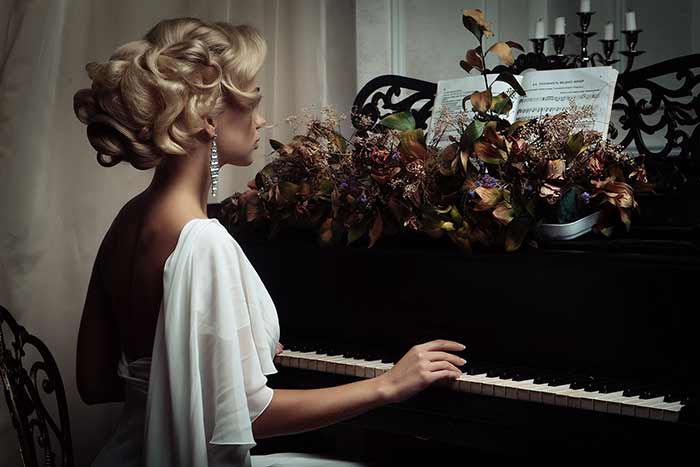
In a world full of screens and gadgets, the classic piano shines bright as a symbol of creativity and hard work. This beautiful instrument, with its keys of black and white, takes both players and listeners on a magical ride filled with deep feelings and smart discoveries. But, learning to play the piano isn't always easy. This article explores the many good things and a few tough spots about diving into piano playing, showing why, even with its ups and downs, it's still a journey worth taking. The Benefits of Playing Piano 1. Enhanced Cognitive Abilities Studies have repeatedly confirmed that [...]

The Surprising Pros and Cons of Playing Piano: Why It’s Still Worth Pursuing2024-03-07T15:11:16+00:00

Why I love teaching adult amateur pianists

2021-10-02T09:14:46+01:00

I enjoy teaching adult amateur pianists for a variety of reasons, but the major one is that they have a passion and love for the instrument that I have rarely seen in professional pianists. Professional pianists, of course, adore the piano; otherwise, they would not have chosen to spend their lives playing it, but the level of perfection necessary can sometimes turn the situation around. To defend your title as a concert pianist, you must ensure that each performance is flawless and that each note is played in a precise manner to ensure the overall beauty of your interpretation. Technical and [...]

Why I love teaching adult amateur pianists2021-10-02T09:14:46+01:00

Sound as a central aspect of music making

2021-06-24T19:18:50+01:00

Absolutely everything produces sound. Traffic, speaking, waterfalls, cash machines... and my personal favourite, people playing instruments and people singing. Sound is defined as “vibrations that travel through the air or another medium and can be heard when they reach a person’s ear”. From my experience we take sound for granted. I am quite certain that the majority of us does not hear a sound and think “that is a traveling vibration”. Music, having sound production in its essence, is perhaps the most abstract of arts - we can not see it, touch it, it enters our ears and the rest happens [...]

Sound as a central aspect of music making2021-06-24T19:18:50+01:00

How to adapt to a different piano for each performance

2021-03-01T10:44:41+00:00

Having to adapt to a different piano at each performance can sometimes be quite a tricky exercise. There are basically two standard acoustic pianos, namely the upright piano and the grand piano. There is quite a significant difference between them, let alone having to play on any given piano except for the one you are used to playing on. The upright piano has vertical strings and is more seen as the ‘household’ piano used for training children or plainly for a practice instrument. The action is that of hammers hitting against the vertically strung strings within an upright wooden body. The [...]

How to adapt to a different piano for each performance2021-03-01T10:44:41+00:00
Go to Top